
Choosing a wedding dress code is one of the decisions that causes the most uncertainty for couples. It doesn’t just affect how the photos turn out: it defines the tone of the entire celebration. A poorly communicated or poorly chosen dress code creates confusion among guests and breaks the visual coherence of the day. At UAUU we have spent years organising weddings in Barcelona and the surrounding area, and we know that this detail makes the difference between a wedding with its own identity and one without a clear vision.
In this article you will find everything you need to know to choose and communicate your wedding dress code without complications.
What does wedding dress code mean?
A wedding dress code is the indication that the couple gives their guests about the type of attire expected at the celebration. It is not an imposition: it is guidance that helps everyone dress in line with the atmosphere and style of the wedding.
Every wedding has its own identity. A ceremony at a rustic farmhouse does not call for the same attire as a gala celebration in a palace. The dress code is the way to convey that identity to guests before they arrive at the event.
Defining it clearly from the start prevents someone from showing up in jeans at a black-tie wedding, or in evening wear at an informal countryside celebration. In both cases, the guest feels out of place and you lose visual coherence in your photos.
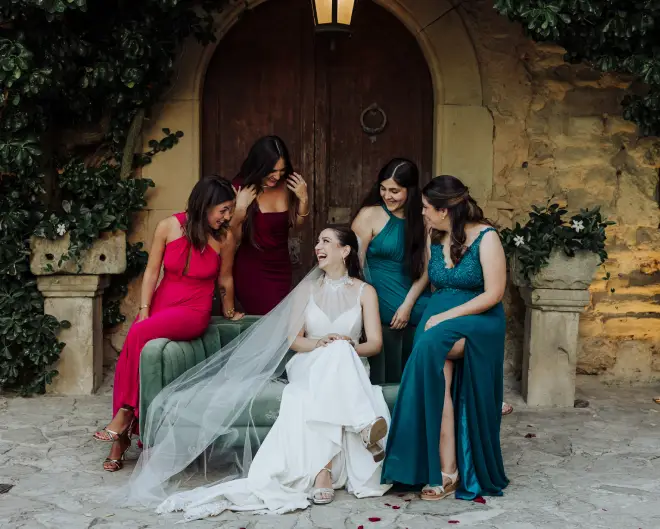
Atypical Wedding
Most common wedding dress code types
These are the most widely used dress codes at weddings in Spain:
- Black tie / Formal: the most formal level. Tuxedo for men, floor-length gown or elegant suit for women. Reserved for gala weddings or evening weddings in luxury venues.
- Semi-formal / Cocktail: the most common at weddings in Spain. Dark suit for men, midi or cocktail dress for women. Allows some personality without sacrificing elegance.
- Smart casual: polished but relaxed. Dress trousers with a shirt for men, a summer dress or coordinated outfit for women. Works well at daytime outdoor weddings.
- Themed or specific colour: the couple asks guests to dress within a particular colour palette or follow a theme. Requires very clear communication to avoid misunderstandings. White, for example, is typical of Ibiza-style weddings.
- Informal / Casual: for intimate weddings, celebrations in natural settings or low-protocol daytime events. Less common but perfectly valid if communicated clearly.

How to communicate the wedding dress code to your guests
The timing and channel matter as much as the message. These are the basic rules:
- Include it in the invitation: this is the natural place. One line at the bottom of the invitation is enough: “Dress code: cocktail” or “We kindly ask for semi-formal attire”.
- Use clear terms: not all guests are familiar with dress code terminology. If you use “black tie”, add a brief explanation in brackets.
- Reinforce it on your wedding website: if you have a wedding website or page, dedicate a section to the dress code with visual examples.
- Anticipate questions: some guests will ask. Have a consistent answer ready for everyone.
- Don’t leave it to the last minute: communicating it less than a month in advance is too late. Guests need time to prepare their outfit, especially if they need to buy something new.
The golden rule: the clearer and earlier, the fewer misunderstandings. A vague or late wedding dress code causes more problems than not specifying one at all.
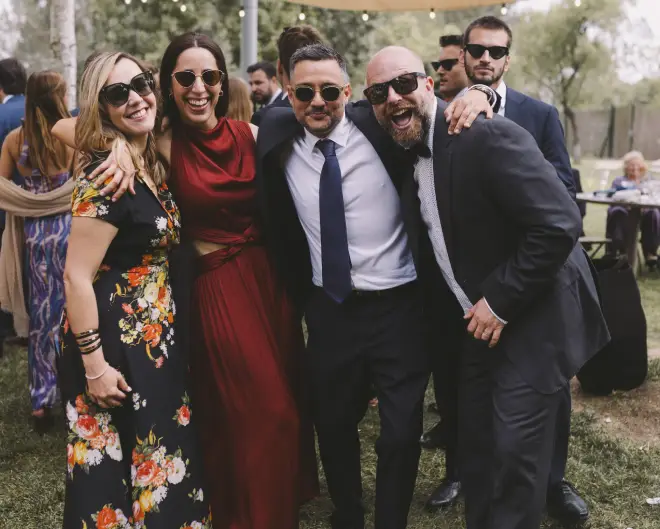
Laura Chacon Photography
What to wear for each dress code type
To spare guests any guesswork, here is a concrete reference by type:
Black tie / Formal: Men, black or navy tuxedo with bow tie. Women, floor-length gown or wide-leg trousers in noble fabrics (silk, satin, lace).
Semi-formal / Cocktail: Men, dark suit with or without a tie. Women, knee-length or midi dress in neutral or understated colours. Avoid white and anything too bold that might compete with the bride.
Smart casual: Men, chinos or dress trousers with a shirt, no tie. Women, floral dress, skirt and blouse combination, or an elegant jumpsuit.
Themed with colour: Follow the specified palette. If the couple asks for “earth tones”, that rules out black, white and any saturated colours outside that range.
Common mistakes with the wedding dress code
These are the most frequent errors we see in dress code communication when organising weddings:
- Not specifying one: leaving every guest to interpret the situation freely guarantees inconsistent results.
- Being too vague: “dress elegantly” is not a dress code. It is an invitation to confusion.
- Choosing a dress code that doesn’t match the venue: requesting black tie at a rural farmhouse or smart casual at a luxury ballroom breaks visual coherence.
- Ignoring the time of year: black tie in August outdoors is uncomfortable for everyone. The dress code must also account for weather conditions.
- Forgetting about children: if there are children at the wedding, indicate what is expected of them too, or at least make it clear that they have more flexibility.

Practical tips for choosing the perfect dress code
Before deciding, go through these points:
- Start with the venue: the space where you celebrate your wedding shapes the dress code. A rustic setting like Castell de Tous calls for a more natural and relaxed look. A venue like Can Macià suits both semi-formal and more intimate, countryside styles.
- Think about your guests: if many of your guests are older, a strict black tie may be demanding. Adapt the level of formality to who will actually be there.
- Choose just one code: offering options (“formal or semi-formal”) creates doubt. The more specific, the better.
- Coordinate with your own looks: the guests’ dress code should complement, not compete with or clash against, the couple’s outfits.
- Decide early: the sooner you have it settled, the sooner you can communicate it and move on to other things.
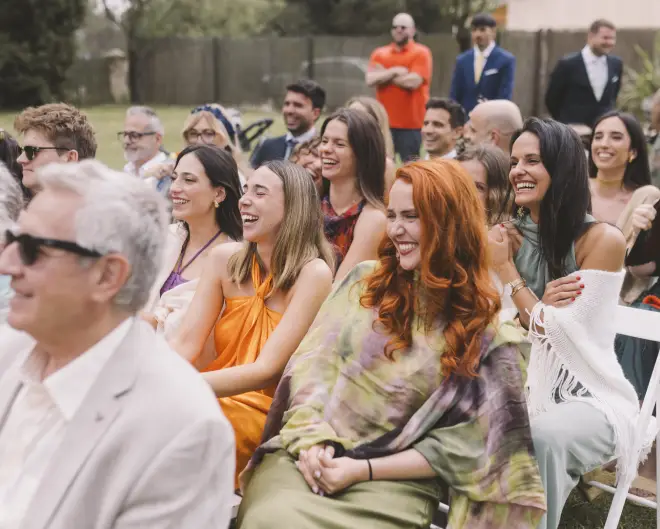
Laura Chacon Photography
Frequently asked questions about wedding dress codes
Is it mandatory to specify a dress code?
No, but it is highly recommended. Without guidance, every guest will interpret the situation in their own way, with very varied results.
Can I ask guests to wear a specific colour?
Yes. It is an increasingly popular trend. The key is to be very specific: indicate the exact shade range, not just the colour, and provide visual examples if possible.
What do I do if a guest doesn’t follow the dress code?
Nothing. Once everyone is at the event, there is nothing you can do and it is not worth the conflict. Preventive management (clear, early communication) is the only real tool.
Does the wedding dress code apply to the civil ceremony as well, or just the reception?
It applies to the entire day. If the ceremony and reception take place in very different settings, you can specify: “informal ceremony, formal dinner”.
How do I communicate the dress code without it sounding like an order?
With the right tone. “We would love for you to wear pastel shades to complete the colour palette of the day” sounds very different from “pastel colours are mandatory”. How you say it matters.
The wedding dress code: a decision worth making with intention
A wedding dress code is not an aesthetic whim. It is an organisational tool that, when applied well, adds coherence, improves the guest experience and reinforces the identity of your celebration.
At UAUU we have guided hundreds of couples through this process. We know that every wedding is different and that there is no universally correct dress code: there is the one that fits you, your venue and your guests. Our job is to help you find it and communicate it well.