
When you start planning your wedding, your first thoughts usually go to the venue, the menu or the dress. But before any of that, there’s a step you can’t skip: the legal paperwork to make your marriage official. And it’s worth starting earlier than you think.
Getting married in Spain involves a set of requirements for a civil wedding, with specific documentation and deadlines that set the pace. Knowing them from the start saves you surprises and lets you coordinate the administrative side with the celebration without stress. At UAUU we’ve been organising weddings in Barcelona for years and we’ve seen first-hand how a lack of planning around paperwork can disrupt dates that seemed locked in. So here’s everything you need to know.
What exactly is a civil wedding in Spain?
A civil wedding is a marriage celebrated before a civil authority, with no religious component. In Spain, it can be officiated by the judge in charge of the Civil Registry, the mayor of the municipality, or a councillor to whom the mayor has delegated. Notaries have also had the authority to officiate civil marriages since 2021.
Legally, a civil wedding has exactly the same validity as a religious one. The difference lies in the procedure: instead of going through the Church, you go through the Civil Registry or the Peace Court of your municipality. The outcome is the same: you are registered as a married couple in the Civil Registry, which is what determines your marital status under the law (though not in the eyes of the Church if you don’t also marry religiously).
If you want to know more about how the ceremony itself works, the article on the script for a civil wedding ceremony gives you a detailed breakdown of each part.

Laurachacon photography
What are the requirements for a civil wedding?
The requirements for a civil wedding are the same across the whole country, although each Civil Registry may ask for additional documents depending on the case. These are the basic documents both parties need to provide:
- National ID card or passport in date.
- Literal birth certificate issued by the Civil Registry of the place of birth, no more than six months old.
- Certificate of registration (empadronamiento) from the municipality where you live, also recent (generally no more than three months old).
- Sworn declaration of marital status or certificate of single status, depending on what the registry where you file the application requires.
- Photocopy of the ID of two witnesses who can confirm that you both know each other’s details and that there is no legal impediment to the marriage.
Some registries will also ask for a marriage application form, which you can download from the Ministry of Justice website or collect directly at the office. The most practical step is to call your local Civil Registry first to confirm the exact list of documents they need.
All documents must be submitted in original. For the birth certificate, bear in mind that if you were registered in a different municipality from where you now live, you will need to request it by post or online from that specific registry, which can take several weeks.

Where is it processed and how long does it take?
The requirements for a civil wedding mean you need to go to the Civil Registry of the municipality where at least one of you is registered, or to the Peace Court if you live in a small municipality without its own Civil Registry.
The process has two distinct phases. First you submit the documentation and the file is opened. The Registry checks that there is no legal impediment to the marriage (family ties, a previous undissolved marriage, etc.). Once the file is approved, you are assigned a date for the official ceremony.
As for timelines, they vary considerably depending on the municipality and the workload of the registry. In large cities like Barcelona or Madrid, processing times can exceed three months for the file alone. Adding the time needed to gather all the documents, the whole process typically takes between three and six months.
The practical advice: start the paperwork as soon as you have a rough idea of your celebration date. If you want to get married in June, don’t wait until January to call the registry. The article on how to organise a wedding step by step gives you a complete guide to everything that needs coordinating well in advance.
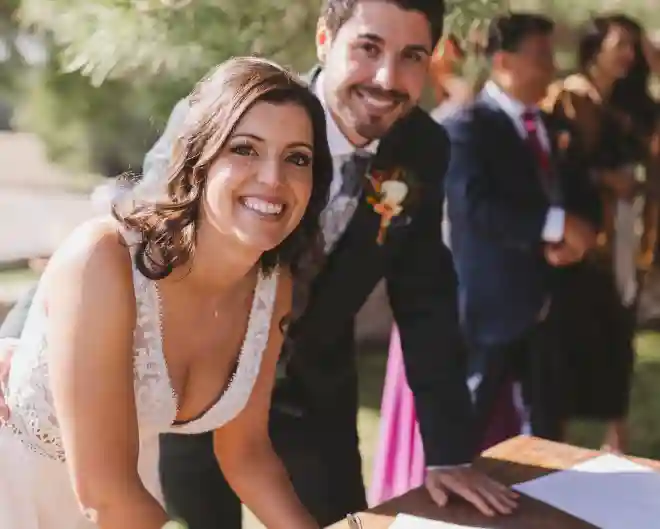
Laurachacon photography
Special cases: foreigners, divorced and widowed
If either of you is not Spanish, the requirements for a civil wedding expand. In general, you will need the apostilled birth certificate issued by the authorities of the country of origin and, if it is not in Spanish, a sworn translation. Some countries also require a certificate of matrimonial capacity issued by the relevant consulate in Spain.
If one or both of you are divorced, you will need to provide the final divorce judgement or the court-approved separation agreement. Without this document, the Civil Registry cannot process the file, as it needs to confirm that the previous marriage has been legally dissolved.
In the case of widowhood, the required document is the death certificate of the former spouse. The family record book from the previous marriage may also be requested.
In all these special cases, processing times may be longer. If your situation is complex, consult the Civil Registry directly before setting any celebration date.
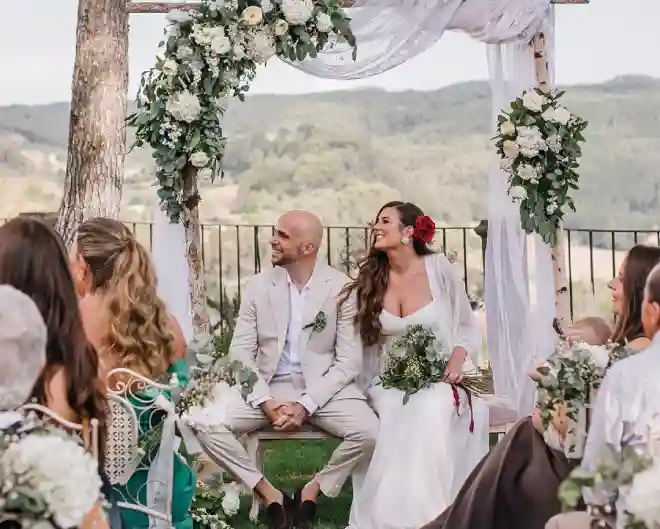
fdagaldames
From the registry to the venue: combining paperwork and celebration
One of the most confusing aspects is the relationship between the legal act and the celebration. They are two separate things that can happen on the same day or on different days.
Many couples choose to formalise the legal marriage at the court or registry in an intimate ceremony, and organise the celebration with guests on a different date and at a different location. This gives you complete freedom to choose your celebration venue without being limited by the court’s availability or capacity — or by the requirements for a civil wedding.
Other couples prefer the legal signing and the celebration to take place on the same day. In that case, the official ceremony can be held at the celebration venue if certain conditions are met, or you can go to the court first and arrive at the venue afterwards.
What is certain is that your choice of venue does not affect the legal paperwork, and the legal paperwork does not affect your choice of venue. You can marry legally in your municipality and celebrate at Can Macià, at Mas Vivencs or at any venue that fits your vision of the day.
For help coordinating the timing between the legal side and the logistics of the celebration, the article on how to choose your wedding date is a good starting point.

Frequently asked questions about civil wedding requirements
Do we have to get married in the municipality where we are registered?
Not necessarily. The marriage application is filed at the Civil Registry of the municipality where at least one of you is registered, but the official ceremony can take place in a different municipality. Checking with the specific registry is always the safest step.
How much does a civil wedding in Spain cost?
Processing the marriage file at the Civil Registry is free of charge. If you choose a notary, fees vary depending on the notary and the region. The ceremony at the town hall may also involve a small municipal fee, though in many cases it is symbolic or free.
Can two foreigners get married civilly in Spain?
Yes, provided that at least one of them is legally resident in Spain. They will need to prove their legal status in the country and provide documentation from their country of origin, duly apostilled and translated.
How long are the documents we submit valid for?
The civil wedding requirements for the birth certificate and the registration certificate carry a validity of between three and six months depending on the registry. Keep the dates in mind when you request them so they don’t expire before the process is complete.
Conclusion
The requirements for a civil wedding in Spain are not complicated, but they do require time and planning. The most common mistake is underestimating the Civil Registry’s timelines and arriving with the documents too late. Start as early as you can, gather the paperwork with plenty of margin, and confirm with your local registry exactly what they need in your specific case.
Once the legal side is sorted, the rest is celebration. And that’s where UAUU comes in. We’ve been accompanying couples at their weddings in Barcelona and the surrounding area for years, with venues and teams ready to make the day you’ve planned happen exactly as you imagined it.