
The marriage certificate is one of the most important documents in any wedding, whether civil or religious. While many couples focus on the dress, banquet, or music, without this simple paper signed at the end of the ceremony, the marriage would have no legal validity. Do you really know what a marriage certificate is, why it is signed, who must do it, and what it is used for afterwards? At UAUU, we answer all the most common questions and explain in detail everything you need to know about the marriage certificate.
What is the marriage certificate?
The marriage certificate is the official document that certifies a couple has married according to the law. It is a written statement, signed by the spouses, the witnesses, and the competent authority (judge, notary, priest, or other authorized celebrant), stating that both have freely and knowingly given their consent to marry.
Do not confuse it with other documents related to marriage:
- Marriage license: a prior authorization to get married (required in some countries or contexts).
- Marriage certificate (official copy): document issued by the civil registry once the marriage is registered, valid for legal and administrative procedures.
- Family book: official document listing the family data created after marriage.
The marriage certificate is the basis for all of them, since without its signature the marriage cannot be registered nor can the subsequent certificates be obtained.

Why is the marriage certificate signed?
Signing the marriage certificate is the act that gives legal validity to the marriage. Without this signature, the ceremony has no legal effect. The reason is simple: the law requires that the consent of both parties is recorded in writing and in front of witnesses, to prevent doubts, fraud, or coercion.
Signing the certificate serves three main purposes:
- It confirms that both parties have freely and knowingly expressed their desire to marry.
- It serves as documentary evidence before any official body, court, or authority.
- It allows the marriage to be registered in the corresponding Civil or religious Registry.
In short, the marriage certificate is the document that transforms the ceremony into an act with full legal validity.
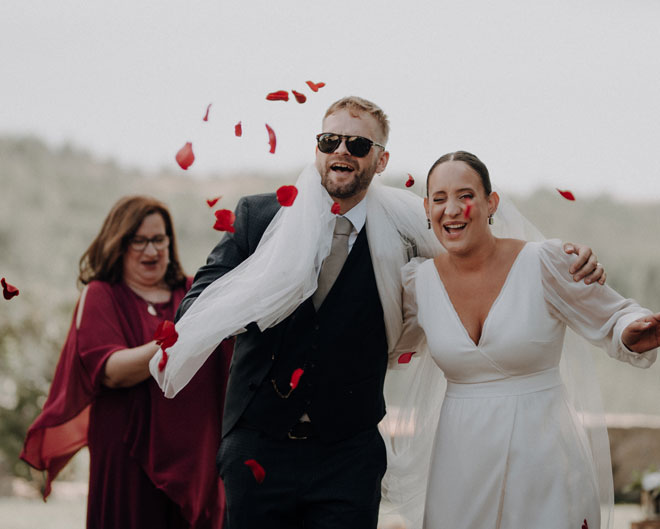
Berta Camprodon Fotografia
Who signs the marriage certificate?
Signing the marriage certificate is a solemn and mandatory moment. The following must sign:
- Both spouses (bride and groom, or partners in same-sex marriages).
- At least two wedding witnesses of legal age and with legal capacity (in Spain, they can be relatives or friends).
- The officiant or competent authority: judge, notary, councillor, priest, authorized minister, etc.
All must be physically present at the time of signing. If any signature is missing, the marriage is not valid.
When and where is the marriage certificate signed?
The marriage certificate is always signed at the end of the ceremony, right after the couple say “I do” or declare their consent.
In civil weddings, it is usually signed at the table where the officiant reads the act. In religious weddings, the signing usually takes place in the sacristy, a side chapel, or sometimes in front of the altar.
After signing, the certificate remains with the officiant, who is responsible for submitting it to the civil registry (for civil weddings) or parish/diocese (for religious weddings). The couple do not keep the original certificate but can request copies or official certificates once the marriage is registered.

What information does it contain?
The specific content can vary depending on the type of wedding and local regulations, but a standard marriage certificate usually includes:
- Full personal details of both spouses (name, surname, ID, place and date of birth, address…)
- Express declaration of consent and confirmation that there are no legal impediments.
- Details of the witnesses (name, surname, ID, address…)
- Details of the officiant.
- Exact place, date, and time of the celebration.
- Signatures of all participants.
In the case of religious weddings, the certificate usually also includes information from the canonical marriage file and the Church’s confirmation.
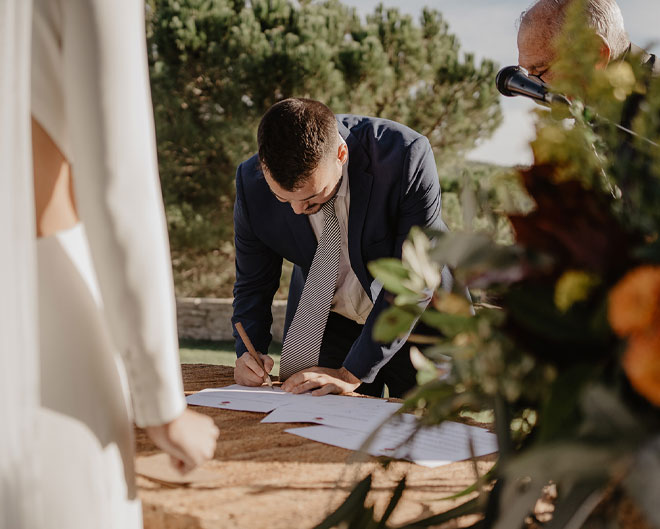
Hygge Weddings
Differences between civil and religious marriage certificates
Although the objective is the same—to record the marriage legally—there are some differences:
- Civil wedding: the marriage certificate has immediate legal effect. After signing, it is sent to the Civil Registry and the official marriage certificate is obtained.
- Religious wedding: the certificate is signed during the ceremony, but it must then be sent to the Civil Registry for the marriage to have full legal effect. In the Catholic Church, the certificate includes references to the marriage file and canonical requirements.
- International marriages: if one of the spouses is a foreigner or the wedding takes place abroad, the marriage certificate may require sworn translation, apostille, and additional procedures for recognition in other countries.
Frequently asked questions about the marriage certificate
- What if there is an error in the certificate? It must be corrected as soon as possible by requesting an amendment at the civil registry or corresponding parish. Failure to do so may cause legal problems.
- What happens if a witness does not sign? The certificate is not valid. The signature of both legal-age witnesses is essential.
- When is the official marriage certificate delivered? Once registered in the Civil Registry, the official certificate is issued (usually a few days after the wedding).
- Can you request a copy of the marriage certificate? Yes, at any time after the wedding, either from the civil registry or the corresponding parish or diocese.
Why the certificate is much more than a formality
The marriage certificate is the document that turns a ceremony into a legally recognized act. It is not just an administrative requirement but the written testimony of a free and conscious decision. Carefully review the certificate, check the details, and keep copies safe to avoid problems and preserve the symbolic and legal value of that day.
At UAUU, we help you resolve any questions about the marriage certificate and other formalities so your wedding is perfect… even on paper.