
Organizing a civil wedding may seem simple until the legal and administrative details appear. One of the most frequent questions is: how many witnesses at a civil wedding?
Although the figure of the witnesses is essential, it’s not always clear how many are needed, what their role is, or who can take on this responsibility. At UAUU we have answered hundreds of questions on this topic and, from experience, we know that choosing the right witnesses is just as important as finding the perfect venue or designing the menu.
In this article, we answer all the key questions: from official regulations to practical advice on choosing the right people, including the symbolic role of witnesses and their emotional significance. If you want to avoid surprises and ensure everything runs smoothly on your big day, keep reading.
What is a witness at a civil wedding and why are they needed?
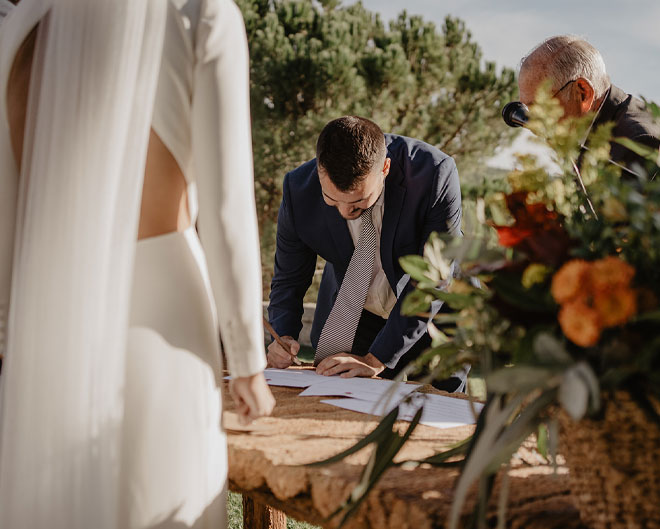
A witness at a civil wedding is an adult who, together with the couple and the officiant, signs the marriage certificate to confirm that the ceremony has taken place and that both partners have freely given their consent. Beyond the legal function, witnesses represent the couple’s support, trust, and companionship on one of the most important days of their lives.
Their presence is absolutely essential: without witnesses, there is no legally valid marriage. In many families and groups of friends, being a witness is an honor, a gesture of trust, and a role that remains memorable—both in the couple’s hearts and in the official marriage record.

How many witnesses at a civil wedding: official regulations in Spain
Spanish law states that every civil wedding must have at least two witnesses. This is the minimum and mandatory number, whether the ceremony takes place at city hall, in court, at a notary’s office, or any other space authorized for civil marriages.
These two witnesses must be adults with full legal capacity, present during the ceremony, and able to sign the marriage certificate alongside the couple.
This requirement applies throughout the country. Although some city halls or notaries allow extra witnesses (for symbolic signatures), only the two legally required witnesses will appear on the official record.

Can you have more than two witnesses at a civil wedding?
The answer is yes, with certain conditions. If you’re wondering how many witnesses at a civil wedding, the regulations require two, but you can invite more people to participate as symbolic witnesses, read texts, give a speech, or join the couple for the central part of the ceremony.
However, from a legal standpoint, only the signatures of two witnesses are valid on the marriage certificate. If you want more people to sign, check with the relevant authority before the wedding: some notaries or courts allow several witnesses to sign “in parallel,” though only two will appear on the official document. This can be important if you want to give prominence to several friends or relatives.
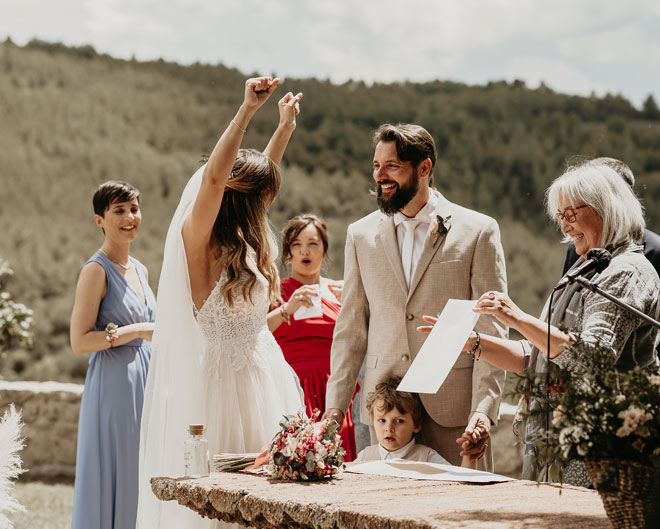
At UAUU, in our personalized ceremonies, it’s common for symbolic witnesses to join the couple at the “altar” or during the exchange of vows, even if they do not sign the certificate.
kike & jud
Who can be a witness at a civil wedding?
The requirements for witnesses are simple but important to avoid last-minute problems:
- Minimum age: witnesses must be over 18 years old.
- Legal capacity: they must not be legally incapacitated or banned from exercising civil rights.
- Nationality: witnesses may be Spanish or foreign. In either case, they must provide a valid ID (DNI, NIE, or passport).
- Relationship to the couple: the law does not require family ties nor does it prevent relatives from acting as witnesses. They can be parents, siblings, friends, work colleagues… The key is that they are trustworthy and capable of certifying what they have witnessed.
It’s not necessary for witnesses to live in the same city or be Spanish nationals. However, if they are foreign, they must bring official documentation (a valid passport) and, in some cases, a sworn translation may be required if the documentation is not in Spanish.

What documents do witnesses need to provide?
When signing the marriage certificate, witnesses must present a valid ID: DNI, NIE, or passport. In some places, witnesses are asked to provide a copy of their ID days before the ceremony, especially if a witness is foreign or if required by the local civil registry.
It’s best to check with the wedding venue to see if documents need to be submitted beforehand or if it’s enough to bring them on the day. At smaller town halls or notary offices, bringing the ID on the day is usually fine, but larger city halls may require documents ahead of time to prepare the file.
Do witnesses need to be present for pre-wedding paperwork?
It depends on the municipality. In most parts of Spain, the pre-wedding paperwork (matrimonial file) can be completed without witnesses present. However, in some places, at least one witness must sign during the process to confirm that the couple meets the legal requirements and that there are no impediments to the marriage.
It’s always best to check with the local civil registry, city hall, or notary to know whether witnesses need to attend any appointments before the wedding or only be present on the day itself.
Hyggeweddings
The role and symbolic value of witnesses at a civil wedding
Legally, the witness is there to sign the certificate and certify that the ceremony has taken place according to the law. In practice, though, their role goes further. Choosing witnesses is an emotional decision: they are often people who have accompanied the couple through different stages of life, representing friendship, family, and support.
At UAUU we’ve seen it all: couples choosing their parents as witnesses, childhood friends, siblings, even grown children. Often, witnesses help with planning, cheer on the couple, give speeches, or get involved in the wedding logistics. For many couples, it’s a way of showing gratitude for a friendship or special relationship.
UAUU’s tips for choosing witnesses
- Choose people who really mean something to you: don’t let social pressure decide—prioritize trust and closeness.
- Let them know well in advance: this gives them time to plan and prepare the necessary documentation.
- Consider the logistics: if a witness lives abroad or far away, make sure they can attend and have the correct documents.
- Explain the significance of their role: being a witness is an honor and a responsibility; let them know what it means to you.
- Don’t forget symbolic witnesses: if you want to involve more people, include them in rituals or speeches—even if they don’t sign the official certificate.
Frequently asked questions about how many witnesses at a civil wedding
- Can you change witnesses at the last minute? Yes, but you must notify the authorities in advance and provide updated documentation before the ceremony.
- Can witnesses be non-family members? Yes, anyone of legal age and capacity—family or not—can be a witness.
- Can witnesses be foreigners? Yes, as long as they have a valid passport or legally recognized ID in Spain.
- Can witnesses be people with disabilities? Yes, as long as they have recognized legal capacity.
- What happens if a witness is missing on the day of the wedding? The ceremony cannot be legally held until there are two witnesses present and able to sign. Make sure both can attend and that there are no last-minute surprises.
Knowing how many witnesses at a civil wedding helps you plan with confidence
Making sure you know how many witnesses at a civil wedding and understanding their role is key to planning the ceremony and avoiding last-minute stress. Choosing your witnesses well is a gesture of trust and affection that adds meaning to your big day. At UAUU we help you solve all legal and practical questions, so that your only worry is to enjoy. Rely on our experience and make your civil wedding the perfect memory, with the witnesses you truly want by your side.