
The ceremony is, for many couples, the heart of the wedding. That’s why choosing wedding readings is not just a formality: it’s a chance to fill every moment with meaning and emotion, to give voice to what is sometimes hard to express, and to share with your guests words that are remembered long after the applause.
At UAUU, we’ve seen how a thoughtful selection of readings can transform the atmosphere, make people laugh, move them to tears, or even surprise the guests. If you want your wedding to have personality, choosing the right words is just as important as the venue, music or decoration.
Why choose readings for weddings?
Words have a power that’s hard to match. A text read aloud, with intention, can move, bring solemnity, make people smile or make time stand still for a few minutes. Something just as important as the wedding decor.
Wedding readings are a way to personalise the ceremony, create a sense of intimacy or complicity, and give the couple the chance to share their story, values or hopes for the future—directly or indirectly—with their guests.
Choosing the right reading means thinking about the tone you want to set, the message you want to share and how to involve your loved ones in the celebration.
Types of wedding readings: civil, religious and symbolic
Readings for civil weddings
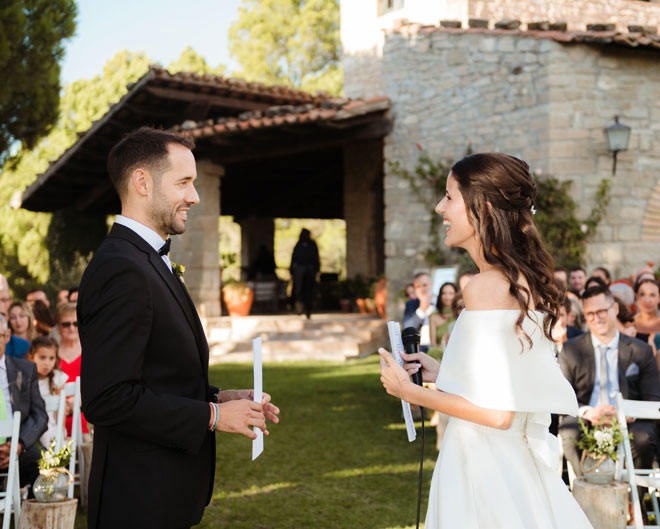
Civil weddings are becoming increasingly common and offer total freedom when it comes to choosing readings. There are no limits here: excerpts from novels, poems, personal speeches, song lyrics or even texts written by the couple themselves. It’s the perfect setting for friends, siblings or parents to take part, sharing words that have meaning for the couple, funny anecdotes, shared memories or wishes for the future.
At many UAUU weddings, we’ve seen how a Benedetti poem, an unexpected letter from a grandparent, or a favourite movie excerpt has brought both tears and smiles in equal measure.
Wabisabi weddings
Civil wedding readings can be classic or modern, intense or light-hearted, short or long, but they always have in common that they speak about and for the couple, and that they match the personality of each celebration.
Readings for religious weddings
In religious weddings, especially Catholic ones, the readings are part of the rite and have a deep meaning.
The nuptial liturgy usually includes several readings: one from the Old Testament, a psalm, a letter from the New Testament and a passage from the Gospel. These texts can be chosen by the couple, with the guidance of the officiant, to reflect their journey and their vision of marriage: faithfulness, commitment, forgiveness, joy, openness to life, hope.
For example, the famous hymn to love by St Paul (“Love is patient, love is kind…”, 1 Cor 13:4-7) or the account of the creation of man and woman (Genesis 2:18-24) are among the most popular choices.
In other Christian traditions, such as Protestant or Orthodox, the meaning is similar: marriage is a covenant and a path of grace, and the Word takes centre stage.
The officiant may propose alternative readings, psalms or hymns, always adapted to the couple’s faith and sensitivity. There are also readings for Jewish religious weddings, where the Torah and wisdom texts play an important role, or for weddings of other faiths, with passages from their sacred texts.

Symbolic or alternative readings
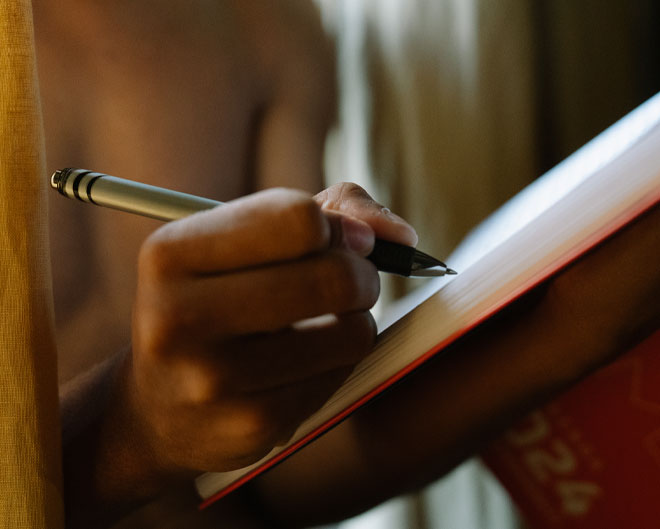
Beyond civil or religious, there’s a whole world of wedding readings with a symbolic flavour: literary excerpts, personal letters, film scenes, song lyrics, passages of philosophy or even words written specially for the occasion. What matters is the meaning: conveying an emotion, a vision of love or a shared story.
Many couples choose to alternate formal readings with more intimate ones, mixing cultural references, nods to their personal story or texts that only they understand.
Juan Cordero fotografia
Symbolic weddings allow for total personalisation, and at UAUU we’ve seen everything from tributes to grandparents to poems written by the couple or by children in the family.
How to choose the perfect wedding reading
There’s no such thing as the perfect reading, but there is a right one for each couple. Where to start? First, think about the overall tone of the ceremony: do you want a solemn, fun, romantic, intimate, or multicultural atmosphere? Choose texts that fit that mood and reflect your values, dreams or most special memories.
Length matters: a reading that’s too long can lose its impact; one that’s too short may feel trivial. We recommend texts of one to three minutes, enough to move people without breaking the ceremony’s rhythm. Check with the officiant if there are limits on time or number of readings, especially in religious or formal ceremonies.
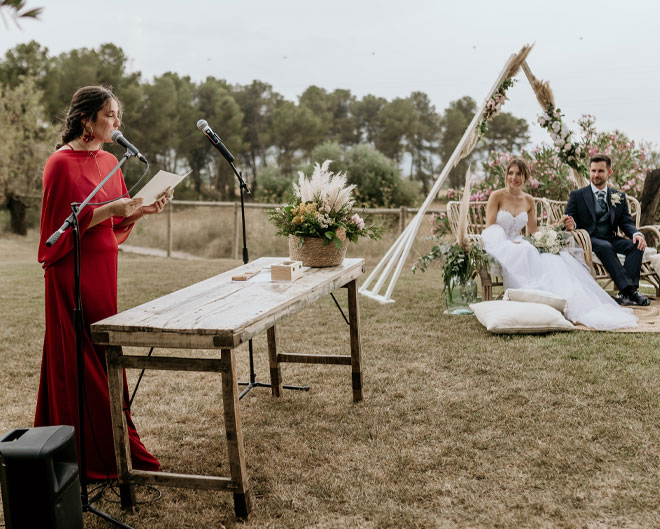
Who will read? Choose people who feel comfortable reading in public and who have a meaningful relationship with you: parents, siblings, close friends, even the couple themselves. It’s important to let them know in advance, share the text, and do a quick rehearsal if possible. Sometimes, an unexpected voice—a child, grandparent or friend who has travelled a long way—can create a truly unique moment.

Ideas and examples of wedding readings
The possibilities are endless. Some of the most popular:
- Romantic poetry: Benedetti, Neruda, Elvira Sastre, Emily Dickinson…
- Literary excerpts: “The Little Prince”, “Rayuela”, “Jane Eyre”, “One Hundred Years of Solitude”…
- Films and series: lines from “Notting Hill”, “Big Fish”, “When Harry Met Sally”…
- Songs: lyrics by Sabina, Serrat, The Beatles, Coldplay…
- Biblical texts: hymn to love (1 Cor 13), Song of Songs, Psalm 33…
- Personal letters, original writing, words from family or friends.
Taranna estudi creatiu
At UAUU, we help you find examples that fit your story, or shape your own words if you want something truly unique. Many couples combine a classic reading with a surprise for their partner, an unexpected passage, or a group intervention where several friends read short phrases that define the couple.
Who can read at the ceremony: roles and recommendations
In principle, anyone the couple trusts can take part in the wedding readings.
The most common is to choose someone close and confident reading aloud, but it’s also lovely to give the floor to several voices, mixing generations, friends and family. Even the couple themselves can take on this role, sharing a joint text or alternating lines as a dialogue.
Another option is for the master of ceremonies or officiant to read on behalf of someone who can’t be present (a friend living abroad, an absent relative). The key is for every reading to feel like a gift—a gesture of complicity and affection.
Frequently asked questions about wedding readings
- How many wedding readings are usual? There’s no set number: usually between one and three, but it depends on the type and length of the ceremony. Civil weddings tend to offer more flexibility.
- When are they read? In religious weddings, readings occupy a specific place in the rite; in civil or symbolic weddings, they can be scheduled at the start, before or after the vows, or as a close before exchanging rings.
- How long should they last? One to three minutes per reading is a reasonable guideline. Best to avoid excessively long or fragmented texts.
- Do you need to inform the officiant? Yes, especially for religious or formal weddings. The officiant should know the content and order of readings to coordinate the ceremony without surprises.
- Is it advisable for the couple to read too? If they feel comfortable, yes—it can be one of the most moving and memorable moments. But it’s not compulsory.
Personalise your ceremony with the best wedding readings
Words have the power to turn a ceremony into something truly memorable. Choosing wedding readings is much more than fulfilling a formality: it’s giving emotion, meaning and beauty to the couple and all the guests.
At UAUU, we help you find the perfect text, involve those you love most, and design a ceremony that’s truly your own. Because when all is said and done, and only the memories remain, what was said (and how it was said) will continue to resonate in your story.